NATURAL SCIENCES TEACHING MODULE
The Subak system in sustainable water management
Developed by:
Sang Putu Kaler Surata
Made Surya Hermawan
Biology Education Study Program, Faculty of Teacher Training and Education, Saraswati Denpasar
A. IDENTIFICATION
- Level: Junior high (lower secondary)
- Grade/Semester: Phase D (Grade 8) / Semester 2
- Topic: Ecosystems (water management in rice paddies through the Subak system)
- Instructional model: Cooperative Jigsaw with project-based learning
- Learning media: CSDT-based interactive simulation
- Time allocation: 6 lesson periods
- Prerequisite: Students have experience using CSDT simulations
B. MODULE DESCRIPTION
This teaching module is designed to give students a deeper understanding of systems thinking and its application to real-life and sustainable agriculture. Students are invited to think holistically, solve problems, and work in teams to find solutions grounded in data and local values.
C. PROBLEMS THIS MODULE ADDRESSES
The module seeks solutions to current issues in sustainable agriculture, global climate change, environmentally friendly technology, and education focused on systems-based solutions. The challenges include:
1. Lack of local context in STEM learning
- Problem: STEM education in Indonesia often fails to connect concepts with local context—traditional farming systems, culture, and local ecosystems—so students see lessons as disconnected from their lives and local challenges.
- Extractive STEM weakness: Approaches that rely on knowledge and technology without cultural and ecosystem context produce learning that is not tied to students’ lived experience.
- Module response: The module integrates the Subak system, a farming practice rich in local cultural and ecological sustainability. Using CSDT simulations, students learn STEM through local wisdom they can apply in their own settings—water management, biodiversity, and environmentally friendly farming. Through generative STEM, students connect STEM concepts to real life and local challenges.
2. Lack of cross-subject integration in STEM
- Problem: STEM is often taught in separate subjects (mathematics, science, technology, engineering) without clear links, so students struggle to see how ideas connect in daily life.
- Extractive STEM weakness: Extractive STEM tends to separate knowledge without showing how ideas combine into sustainable solutions, so learning feels fragmented and irrelevant.
- Module response: The module integrates mathematics, natural sciences, technology, and environmental education in one project-based unit on sustainable agriculture. Through project-based learning (PBL), students collaborate on a project that draws on multiple subjects—for example, computing water needs with mathematics, understanding greenhouse gas cycles with science, monitoring temperature and water with technology, and assessing farming impacts on local ecosystems with environmental education.
3. Climate change and greenhouse gas emissions
- Problem: Rice paddies account for about 11% of global methane emissions. Poor paddy management can increase greenhouse gases and worsen global warming.
- Extractive STEM weakness: Extractive STEM leaves little room for innovation focused on long-term environmental sustainability; it often emphasizes short-term gains over climate and environmental impacts.
- Module response: Through intermittent irrigation (macak-macak), which can cut methane emissions by up to about 70%, students explore how farming affects climate. The Subak-based, generative STEM approach integrates ecological sustainability into learning and offers ways to reduce climate impacts while maintaining productivity.
4. Water resource scarcity
- Problem: Limited water is a major constraint for agriculture, especially rice, which uses large amounts of water.
- Extractive STEM weakness: Extractive STEM often fails to prioritize efficient use of natural resources such as water; short-term profit practices may ignore sustainability.
- Module response: Students learn to manage water efficiently using sensor technology to monitor water levels and understand how drying fields relates to water savings. Through generative STEM, they combine technology and local knowledge to design more sustainable farming systems.
5. Excessive fertilizer and pesticide use
- Problem: Heavy use of chemical fertilizers and pesticides can harm the environment, pollute water, and reduce biodiversity.
- Extractive STEM weakness: Extractive STEM often depends on chemical inputs that disrupt ecosystems and underplays more sustainable alternatives.
- Module response: By integrating organic principles within the Subak context, the module shows how weeds that grow during dry periods can help balance the ecosystem without pesticides. Through generative STEM, students see how technology can support environmentally friendly farming, reduce chemical dependence, and support biodiversity.
6. Limited knowledge of sustainable agricultural technology
- Problem: Many farmers are still unfamiliar with modern tools that improve sustainability, such as sensors for water quality and temperature.
- Extractive STEM weakness: Extractive STEM often focuses on technology that boosts immediate production without long-term sustainability or environmental impact.
- Module response: The module introduces computer-based simulations so students can measure and analyze field conditions and water management. This is part of generative STEM: combining local knowledge with modern technology for more sustainable agriculture.
7. Dependence on unsustainable conventional practices
- Problem: Many farmers still follow conventional practices focused on quick yields and short-term gains, such as hybrid varieties and technologies that can degrade soil.
- Extractive STEM weakness: Such practices prioritize short-term efficiency over long-term sustainability and can damage ecosystems.
- Module response: By integrating the Subak system, which emphasizes biodiversity and sustainability, students learn how traditional practices can respond to modern challenges. Through generative STEM, they see the value of system-based approaches that support ecological, social, and economic relationships and reduce environmental harm.
D. CHALLENGES IN USING THIS MODULE
For a more interactive experience, students can access and run simulations through computer applications called CSDTs (Culturally Situated Design Tools) at https://csdt.org/. These tools connect scientific concepts with local cultural context, letting students visualize and test ideas in realistic situations. With CSDTs, students explore how science, technology, and culture interact and apply knowledge to sustainable, locally relevant solutions. Figure 1 shows two students discussing one of the CSDT simulations available at: https://csdt.org/projects/51178/run?lang=en#.
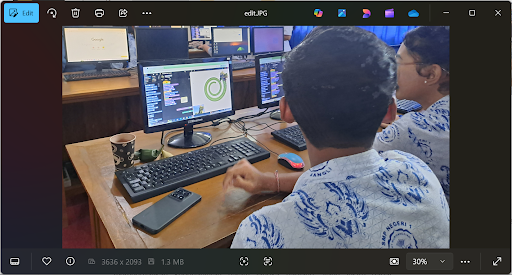
Figure 1. Students exploring new woven patterns from young coconut leaves using a CSDT simulation.
Through the activities in this module, students can visualize water management and the Subak system in Bali, testing concepts in more realistic, data-based settings. CSDTs help students see how science, technology, and culture work together to manage natural resources sustainably and explore innovative responses to environmental challenges facing communities.
E. LEARNING OUTCOMES
1. Science literacy
Science literacy is the ability to understand, apply, and evaluate scientific ideas relevant to daily life. This module supports science literacy by:
- Understanding scientific concepts: Students learn ideas such as the water cycle, greenhouse gases, water management, climate impacts, and ecosystem interactions, especially in Subak-based water management.
- Applying science in real life: Concepts are integrated into sustainable agriculture, natural resource management, and climate change in ways that connect to students’ local challenges.
- Using technology: CSDT simulations help students visualize relationships among temperature, methane emissions, water management, and crop yield, strengthening data-informed analysis and decision-making.
- Analyzing and evaluating data: Students process and analyze experimental data on soil temperature, water volume, and methane to understand impacts on ecosystems and farming.
2. Process skills
Process skills include planning, collecting data, analyzing information, and presenting results systematically. In this module, key process skills include:
- Planning and conducting investigations: Students plan experiments—such as adjusting simulation parameters—to observe effects of temperature, water volume, and methane emissions.
- Using tools and materials in observation: Students use tools including CSDT simulations to measure temperature, water volume, and methane in near real time.
- Collecting, processing, and analyzing data: Students collect experimental data and process it into graphs, tables, or diagrams that show relationships among variables.
- Presenting data visually: Students prepare reports, graphs, diagrams, or scientific posters that present data clearly and logically.
- Evaluation and reflection: Students evaluate results against theory, identify methodological issues, and improve their investigation process.
3. Competencies developed
- Systems thinking: Students model relationships among farming variables (temperature, water volume, methane, yield) using simulations.
- Critical thinking and problem-solving: Students analyze experimental data, draw evidence-based conclusions, and propose solutions for water management and sustainable agriculture.
- Collaboration and communication: Project-based learning with the Cooperative Jigsaw model develops teamwork and effective presentation of results.
F. LEARNING OBJECTIVES
After this unit, students should be able to:
- Explain intermittent irrigation (macak-macak) in the Subak system and its relationship to temperature, methane emissions, and rice yield.
- Process and analyze experimental data on temperature, water volume, methane, and rice yield using CSDT simulations.
- Collaborate in expert groups and home groups to prepare a scientific report on the experiment.
- Write a scientific report and present experimental results based on data analysis.
G. TOPICS
- The Subak ecosystem
- Intermittent irrigation (macak-macak)
- Water management in farming systems
- Effects of temperature and water management on methane emissions and rice yield
H. OPENING QUESTIONS
Have you heard of the Subak system that Balinese farmers use to manage water in their fields? It is distinctive because it combines local wisdom and ecological sustainability.
- Have you seen paddy fields that stay flooded all the time?
- What happens to the soil and plants there?
- Do you know how the Subak system in Bali manages water in an environmentally friendly way?
- What happens if we do not use water more efficiently in agriculture?
- How is paddy water management related to reducing methane emissions?
I. MEANINGFUL UNDERSTANDING
After learning with this module, students gain a meaningful understanding of how sustainable water management in the Subak system matters and how STEM concepts (science, technology, engineering, and mathematics) apply in a local context. Students see how efficient water management affects biodiversity, methane emissions, and rice yield. They also use technology and simulations to analyze experimental data and connect results to sustainable farming practices. The unit provides scientific knowledge and engages students in systems-based solutions to real environmental challenges around them.